Agencies
 Services
- Prairie Trail (0.25 mile) - An easy 0.25-mile trail weaving through our restored native prairie patch. The area is teaming with native prairie forbs and grasses, pollinators, and wildlife (like quails!).
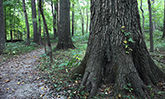
- White Oak Trail (1.5 mile) - With the exception of two flights of stairs, the White Oak is a moderately easy trail offering hikers the greatest variety of vegetation and forest conditions. It passes over five soil types, through upland and bottomland forest, and gives visitors a sense of what settlers experienced when arriving at this part of the state. The Wabash River can be viewed from this trail.
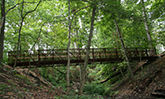
- Tuliptree Trail (1 mile) - An easy 1-mile upland forest trail. Several self-guided brochures featuring tree identification and spring wildflowers growing along this trail are available for visitor use and can be picked up at the trail entrance or in the visitor center. (2 bridge crossings)
- Lake Trail (0.5 mile) - This 0.5-mile easy trail takes you from the visitor center to the edge of the lake. From there, you can take a hike around the lake! (Pet Friendly!!)
- Sweet Gum Trail (0.5 mile) - This short, picturesque trail meandering along Coffee Creek features an interesting rock cliff. Many plants adapted to cool, moist, and shady conditions are found in this area. The visitor must access this trail from the park's north side. The trail is closed periodically due to flooding.
- Schneck Trail (1.5 mile) - This trail is dedicated to Dr. Jacob Schneck, a pioneer Mount Carmel physician and botanist. This easy 1.50-mile trail is accessed from the park's north side and is closed periodically due to flooding.
Fishing
In the late 1970s, a 15-acre lake was developed to provide park visitors additional recreational opportunities and a scenic backdrop. Anglers can fish for largemouth bass, bluegill, and catfish. The lake also is stocked in the spring and fall for trout season. While a boat launch is located on the lake, only trolling motors may be used.
Trails
Trail Information
Six established trails offer hikers excellent views of Beall Woods' old-growth forest. From the easy 1-mile Tuliptree Trail to the 1.50-mile moderately easy White Oak Trail, the nature enthusiast can get a sense of what the settlers saw when they arrived at the banks of the Wabash River.
To preserve the fragile ecosystem, hikers are urged to stay on established trails. Pets, bicycles and horses are not allowed on trails. Collecting or removing any natural object is prohibited. Depending on the season, visitors should come prepared with insect repellent. Since low areas are subject to flooding and standing water, trail conditions are posted by the front door of the Visitor Center.
Hunting
In an effort to reduce the negative impacts white-tailed deer are having on the nature preserve, a deer management program has been implemented at Beall Woods utilizing the archery season.